










In today’s marketing landscape, it can feel like every conversation revolves around clicks, conversions, and social media algorithms. Yet, despite the dominance of digital, print still relevant digital age remains one of the most effective and trusted ways for businesses—especially small businesses—to connect with their audiences.
Why? Because while digital channels offer reach and immediacy, print delivers something digital can’t replicate: tangibility, permanence, and credibility. For businesses that want to stand out in a crowded marketplace, print remains a critical part of the marketing mix.
This article explores why print continues to thrive, how it complements digital, and how small business owners can maximize print’s potential in the modern marketing landscape.
The Psychology of Print: Why Tangibility Still Matters
Marketing is, at its core, about influencing behavior—and psychology shows us that print materials are uniquely suited to do this.
- Engaging multiple senses
When people interact with a printed piece, they’re engaging more than just their eyes. The weight of the paper, the texture of a matte finish, or even the sound of a booklet flipping open all contribute to a richer sensory experience. Neuroscience research confirms that multisensory engagement improves memory retention. This means a printed postcard or catalogue is not only noticed, but remembered longer than a digital ad. - Cognitive processing differences
Studies from Temple University and the U.S. Postal Service found that print ads generate a stronger emotional response and lead to better recall than digital ads. Participants spent more time with physical ads, showed higher comprehension, and had stronger subconscious value associations with brands presented in print. - Credibility and trustworthiness
Digital ads face constant challenges: ad fraud, fake reviews, and consumer skepticism. Print, on the other hand, feels grounded. A high-quality brochure or direct-mail piece signals that a business has invested in presenting itself professionally, which builds subconscious trust. For small businesses trying to establish authority, this credibility can make all the difference. - Permanence and visibility
A printed piece doesn’t vanish with a click. Flyers stay pinned to community boards, postcards end up on refrigerators, and brochures can sit on a desk for months. This creates ongoing brand exposure without continuous ad spend. - The “pause factor”
Print materials encourage people to slow down. Instead of scrolling past in seconds, customers often linger over printed content—whether flipping through a catalogue or scanning a menu. This extra attention provides valuable space for storytelling and brand-building.
Print and Digital: Stronger Together
It’s tempting to think of print and digital as competitors, but the truth is that they work best together. Integrated campaigns that combine both often outperform those that rely exclusively on one.
- Cross-channel reinforcement
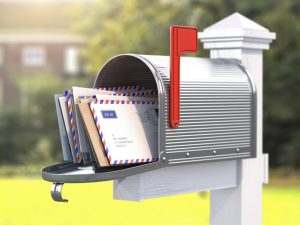
Repetition across multiple channels strengthens brand recognition. For instance, when someone sees a flyer for a new restaurant in their mailbox and then spots an ad for the same restaurant on Instagram, the brand sticks in their memory. That “double exposure” makes it more likely they’ll visit. - Driving digital engagement with print
Print can bridge the gap between offline and online. QR codes, short URLs, and personalized landing pages make it easy for customers to move from a physical flyer to a digital action. For example, a boutique could send out postcards with a scannable code linking directly to a “new arrivals” page. - Leveraging personalization at scale
With variable data printing, businesses can customize printed materials for different customer segments. Imagine a local gym sending one flyer to current members promoting premium classes, while prospects in the same neighborhood receive a flyer offering a discounted trial. This type of segmentation mirrors the personalization customers expect online. - Extending campaign lifespan
Digital ads stop when the budget runs out. Print extends campaign life because materials often stick around. A homeowner may revisit a roofing company’s brochure weeks after receiving it, long after the digital ad disappeared from their feed. - Real-world example
A Toronto-based café launched a seasonal campaign using Instagram ads and local postcard drops. The digital ads boosted awareness, but the postcards—with a physical coupon—drove most of the in-store visits. The integration of both channels created a measurable uplift in sales.
Strategic Uses of Print for Small Businesses
Small businesses often face the challenge of needing to make a big impact with limited budgets. Print can help level the playing field by providing cost-effective, high-visibility tools for local marketing.
- Flyers and neighbourhood campaigns
Flyers remain one of the most affordable ways to spread the word locally. Businesses can target by postal code using Canada Post Neighbourhood Mail, ensuring their message reaches households in specific communities. A plumbing company, for example, can promote seasonal services just to homeowners in a given area. - Business cards that build connections
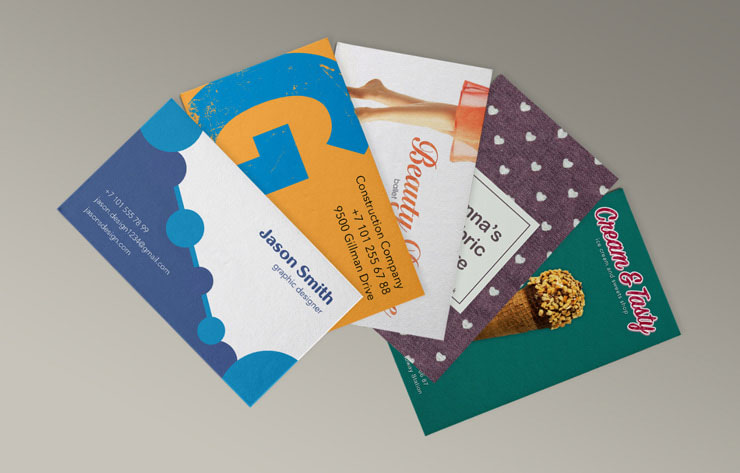
A thoughtfully designed business card still carries weight in a digital-first world. Adding unique finishes like embossing, spot UV, or textured stock transforms a simple card into a memorable brand statement. For professionals in industries like real estate or consulting, this small detail can influence trust and recall. - Brochures and catalogues for depth
Some products and services can’t be summarized in a quick online ad. A brochure allows for deeper storytelling, showcasing case studies, service packages, or product ranges. A landscaping company, for instance, can display before-and-after projects in a printed catalogue left with homeowners after consultations. - Direct mail with measurable ROI
Direct mail campaigns consistently achieve higher response rates than email marketing. A pizza restaurant mailing discount coupons to nearby neighborhoods can expect measurable redemptions. Using unique codes or trackable URLs helps tie results directly to campaign spend. - Event and trade show marketing
Posters, banners, and printed handouts remain indispensable at trade shows, community markets, and networking events. They don’t just provide information—they visually establish presence and professionalism in crowded environments.
The Future of Print in a Digital-First World
Print isn’t static—it has evolved to meet the needs of today’s digital-first consumers and eco-conscious businesses.
- Advanced personalization
Technology now allows print campaigns to be as personalized as email marketing. From names and offers to localized images, each piece can be tailored to maximize relevance. A travel agency could send personalized brochures highlighting destinations aligned with a customer’s past inquiries. - Eco-conscious options
Sustainability is top of mind for many small businesses and consumers. Printers now offer recycled papers, FSC-certified stocks, and vegetable-based inks. Choosing these options allows businesses to maintain marketing effectiveness while aligning with green values. - Interactive print
QR codes, augmented reality (AR), and near-field communication (NFC) bring print to life. A poster with an AR component might allow a customer to scan it and instantly watch a video demo on their phone. These integrations keep print relevant for tech-savvy audiences. - Short-run affordability
Digital printing technology has made it affordable for businesses to produce smaller quantities of high-quality print. This eliminates the need for large, costly print runs and reduces waste, making it ideal for small businesses that want flexibility. - Streamlined print management
Web-to-print portals—like Print Three’s Smart Business Centre—make it easy for multi-location businesses to order materials, maintain brand consistency, and reduce turnaround times. This type of infrastructure transforms print into a scalable, efficient marketing channel.
Practical Tips for Maximizing Print in Your Marketing Mix
To get the most out of print, small businesses need to approach it strategically. Here are some actionable ways to maximize impact:
- Define your target audience
Identify who you’re trying to reach and what they value. A yoga studio might benefit from distributing flyers at health food stores, while a tech start-up could focus on eye-catching event signage. - Pair print with digital action steps
Ensure every printed piece has a clear next step. Whether it’s scanning a QR code, visiting a dedicated URL, or calling a trackable phone number, print should push customers toward measurable engagement. - Invest in professional design
Poorly designed print undermines credibility. Hiring a designer ensures your materials reflect your brand identity with polished visuals, clear messaging, and thoughtful layout. - Prioritize quality stock and finishes
Customers notice the difference between flimsy and premium materials. Choosing thicker stock, gloss coatings, or unique finishes signals that your brand values quality and detail. - Track effectiveness
Use promo codes, personalized URLs, or landing pages to track ROI. For example, a home renovation company might include a URL like “myreno.ca/summerdeal” to monitor campaign traffic. - Stay consistent across channels
Align colors, fonts, and messaging so that whether customers see your Instagram ad or your brochure, they instantly recognize your brand. - Rotate campaigns seasonally
Keep print fresh by adapting campaigns to seasonal needs. A florist might send spring-themed catalogues in March, while a tutoring company distributes back-to-school flyers in August.
Why Print Three Believes in Print’s Lasting Power
At Print Three, we’ve spent over 50 years helping Canadian businesses build stronger connections through print. We’ve seen firsthand how print adapts to new technologies, enhances digital campaigns, and continues to deliver results in a digital-first world.
Our clients range from small local shops to large enterprises, but they share one thing in common: the need to make a lasting impression. Print provides that impression by combining tactile quality, professional credibility, and creative flexibility.
Final Thoughts
The idea that print is dead is one of marketing’s biggest myths. In reality, print is alive, evolving, and thriving. Its permanence, credibility, and tactile nature make it irreplaceable—even in a digital-first world. For small businesses, print offers unmatched opportunities to stand out, build trust, and drive both in-person and online engagement.
When paired strategically with digital channels, print doesn’t compete—it amplifies. Together, they form a powerful marketing engine that helps small businesses not just survive, but grow.
Now is the time to rethink how you’re using print in your business. Whether it’s direct mail, brochures, signage, or integrated campaigns, print has never been more relevant—or more valuable—than it is today.